
Monrovia, January 17, 2026 — Media and education advocate David Arbar Sewarlu, founder of Global Image Liberia, has renewed strong calls for decisive legislative action to criminalize Female Genital Mutilation (FGM), warning that prolonged inaction by Liberia’s Legislature continues to expose women and girls to abuse, trauma, and lifelong health complications.
Speaking amid an intensifying national debate, Sewarlu described the failure to pass the Anti-FGM Bill as “a dangerous silence that places culture above human dignity and political convenience above the lives of children.” He noted that although the bill was drafted and submitted to the National Legislature in 2022, Liberia remains one of the few countries in West Africa without a specific statutory law banning the practice, despite being a signatory to key international human rights instruments, including the Maputo Protocol, the Convention on the Elimination of All Forms of Discrimination Against Women (CEDAW), and the Convention on the Rights of the Child.
“Temporary bans and moratoriums are not laws,” Sewarlu stressed. “Without a clear, enforceable statute, girls—some as young as five—remain at risk, especially in rural communities where enforcement is weak, fear is strong, and silence is enforced by tradition.”
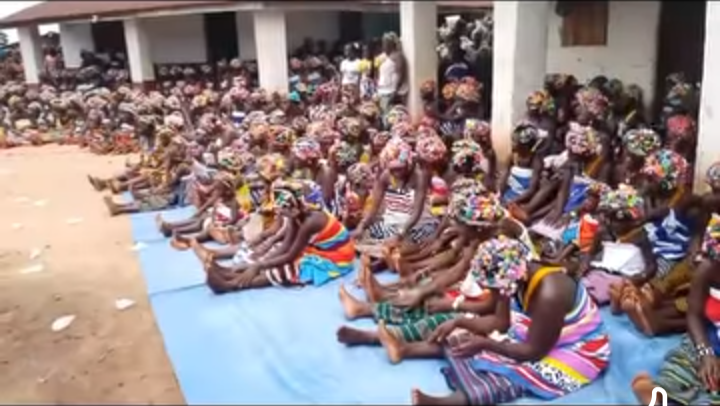
FGM is believed to affect girls between the ages of 5 and 14 in at least 11 of Liberia’s 15 counties. While a three-year moratorium declared in 2022 and a 2023 nationwide ban announced by the National Council of Chiefs and Elders were initially welcomed, advocacy groups say the measures lack the force of law and have failed to end the practice, which continues clandestinely in several parts of the country.
Sewarlu and other advocates have raised serious concerns about the role of the Legislature, accusing both the House of Representatives and the Senate of failing to demonstrate the political will needed to protect women and girls. According to civil society groups, the Anti-FGM Bill has languished in committees for years, with little transparency, no clear timetable for passage, and limited public engagement.
Advocates argue that some lawmakers are reluctant to openly support the bill due to fear of political backlash from traditional communities ahead of elections. Others are accused of quietly aligning with traditional leaders who oppose the criminalization of FGM, creating what Sewarlu describes as “a culture of legislative avoidance.”
“The Legislature cannot continue to hide behind consultations and delays while girls are being cut in secrecy,” Sewarlu said. “Every year of inaction is a year of pain, fear, and irreversible harm for countless children.”
He further warned that the Legislature’s prolonged delay sends a troubling message about its commitment to human rights and child protection, particularly at a time when Liberia seeks to strengthen its democratic credentials and international standing.
The debate has intensified in recent months following outspoken calls by former Miss Liberia Wokie Dolo, who publicly described FGM as a gross violation of women’s rights. Her comments drew widespread support but also fierce backlash on social media, highlighting the deep divisions surrounding the issue.
Advocacy groups have also reported threats and intimidation against anti-FGM campaigners. One notable case is that of Oumaru D. Jabateh, an anti-FGM whistleblower who reportedly fled Liberia in 2023 after receiving death threats from traditionalists in Bong County.
“These threats thrive in an environment where the law is silent,” Sewarlu noted. “When there is no clear law, perpetrators feel protected, and advocates are left vulnerable.”
Despite resistance, Sewarlu acknowledged positive developments. Traditional leaders in Nimba, Bong, Lofa, Montserrado, and Grand Cape Mount counties have publicly renounced FGM and surrendered cutting tools as a symbolic commitment to abandonment. However, he cautioned that symbolic actions must be reinforced by legislation to ensure sustainability and accountability.
Through Global Image Liberia, Sewarlu continues to use media, education, and storytelling to amplify community voices and advocate for social change. But he emphasized that advocacy alone is no longer sufficient.
“Awareness without legislation is incomplete justice,” he said. “The Legislature must act not tomorrow, not after elections, but now.”
Global Image Liberia has joined other civil society organizations in urging lawmakers to urgently pass the Women and Girls Protection Act, submitted by President Joseph Nyuma Boakai in October 2025, which seeks to outlaw harmful traditional practices, including FGM.
According to Sewarlu, continued legislative delay not only endangers lives but undermines public trust in democratic institutions.
“Culture should never be used as a shield for violence,” he said. “Protecting women and girls is not an attack on tradition—it is an investment in Liberia’s future.”
As debate continues on Capitol Hill, advocates insist that the passage of a clear, enforceable anti-FGM law remains essential to ensuring accountability, strengthening enforcement, honoring Liberia’s international obligations, and permanently safeguarding the health, dignity, and rights of Liberian women and girls.
-30-
 Image TV
Leave a comment